(703) 771-8374

How Long Does a Home Inspection Take? (2026 Guide)
Return To Blogs
Intro
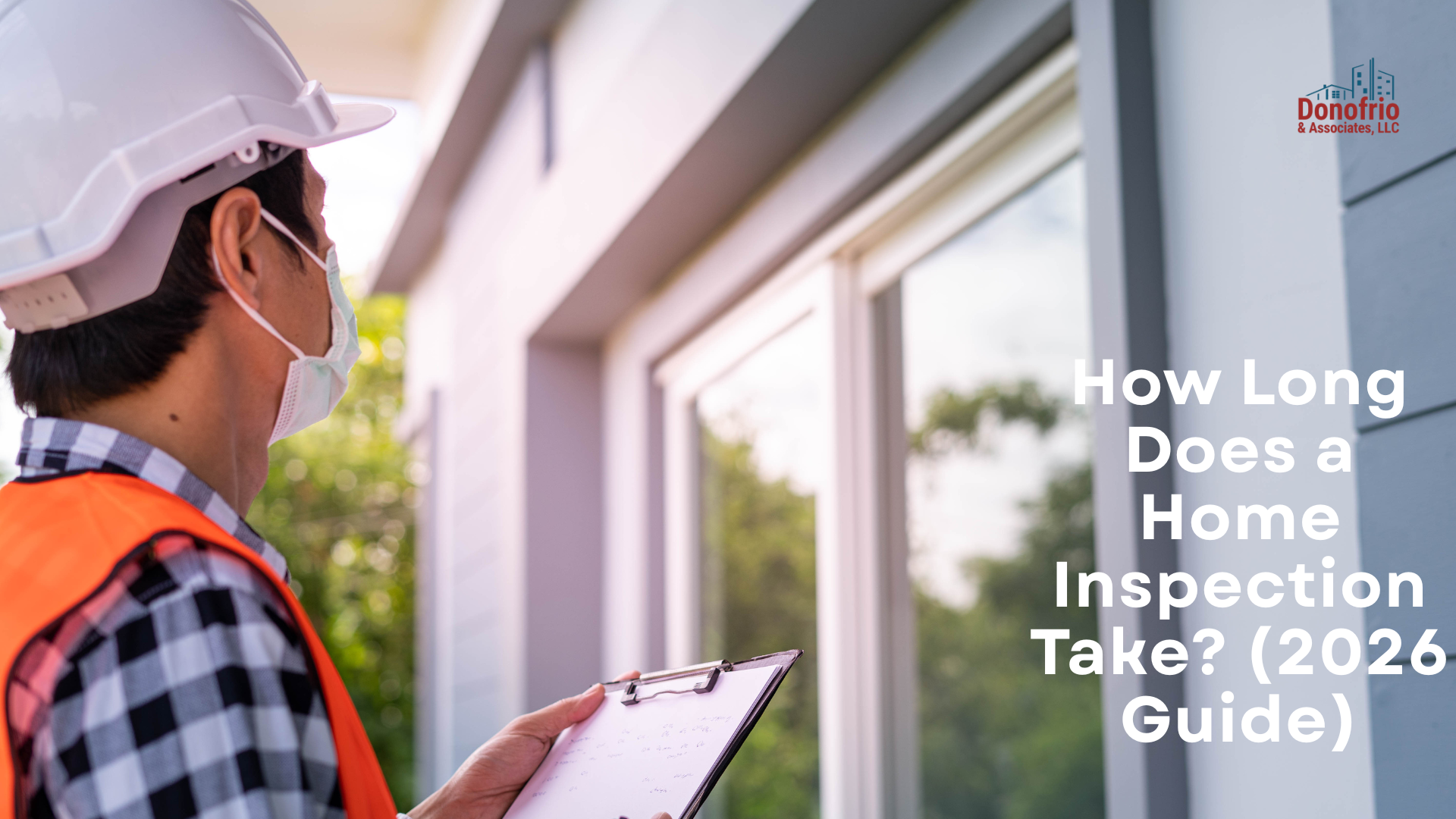
Setting aside time for a physical property evaluation is one of the most critical steps in the home-buying journey. Whether you are balancing a busy work schedule or coordinating with real estate agents, knowing how long a home inspection takes allows you to plan your day effectively. While every property presents a unique layout and structural history, most evaluations fall within a predictable timeframe. In this breakdown, we examine average property timelines, primary time drivers, and what to expect regarding report turnaround times.
Property Size and Layout Expectations
For a standard single-family home ranging between 1,500 and 2,500 square feet, a thorough evaluation typically lasts two to three hours. Smaller properties, such as condominiums or townhomes under 1,000 square feet, often require only 60 to 90 minutes because they lack individual exterior or roof considerations. Conversely, larger estates exceeding 3,500 square feet or multi-story custom layouts can easily take four to six hours to inspect thoroughly. As a general rule of thumb, inspectors add roughly 30 minutes of evaluation time for every additional 500 square feet beyond baseline dimensions.
Property Age and Overall Condition
The age and upkeep of a structure significantly influence the depth of evaluation required on site. Newly built properties or recently renovated homes generally move faster because their mechanical, electrical, and plumbing systems adhere to modern standards. However, homes built more than 40 years ago frequently feature complex wiring panels, aging plumbing lines, or past unpermitted additions that require painstaking documentation. When an inspector encounters multiple deferred maintenance issues or visible structural defects, they spend extra time taking photos, conducting diagnostic testing, and logging details to give you an accurate picture of the property’s health.
Specialized Services and Access Restrictions
Requesting auxiliary testing services directly extends the overall appointment window. Adding specialized checks—such as a sewer scope evaluation, radon continuous monitoring setup, mold sampling, or pool inspection—can add 30 to 90 minutes to the total duration. Furthermore, accessibility issues can slow the process down. If an inspector has to navigate locked crawlspace hatches, blocked attic panels, or heavily cluttered storage areas, clearing access safely takes additional effort. Sellers can help maintain a smooth schedule by ensuring all utility meters, attic scuttles, and furnace panels remain completely unobstructed prior to arrival.
Conclusion
Understanding the timing behind a walkthrough helps you set realistic expectations while navigating your contingency deadlines. While two to four hours is the standard benchmark for most residential properties, a longer walkthrough is often a sign of thoroughness rather than delay. Once the physical walkthrough is complete, inspectors typically deliver a detailed digital report complete with high-resolution photos and repair recommendations within 24 hours. Attending the final 30 minutes of the appointment allows you to review key findings directly with your inspector, giving you maximum confidence as you proceed toward closing.
Recent Blogs
How Long Does a Home Inspection Take? (And What Should Buyers Do During It?)
Oct. 16, 2026
What Is a Home Inspection Contingency and Can You Waive It?
Oct. 09, 2026
Home Inspection vs. Appraisal: What’s the Difference?
Oct. 02, 2026
Signs Your HVAC System May Need Replacement Before You Buy a Home
Sep. 25, 2026